
DAC clears Rs 2.12 lakh crore defence proposals, 82% of procurement to come from Indian industry
Army’s drone warfare and surveillance capabilities, naval missile defence and Air Force modernisation figure prominently in major acquisition push
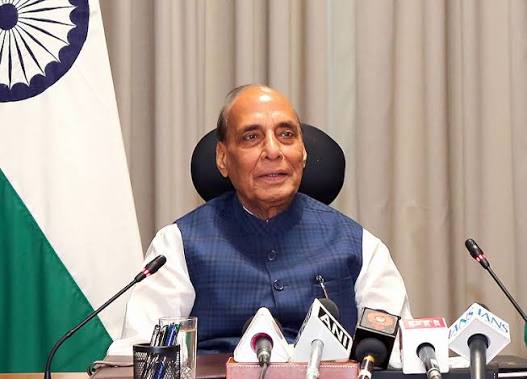
The Defence Acquisition Council (DAC), chaired by Defence Minister Rajnath Singh, on October 26 cleared capital acquisition proposals worth approximately Rs 2.12 lakh crore for the armed forces, with about 82 per cent of the proposed procurement earmarked for the Indian industry.
The approvals mark a major step in the government’s efforts to strengthen the armed forces’ operational capabilities while expanding the domestic defence manufacturing base. The proposals cover a broad range of requirements, from artillery mobility and battlefield surveillance to counter-drone systems, naval missile defence, helicopters and air defence equipment.
The council’s Acceptance of Necessity (AoN) represents an in-principle approval to pursue the acquisitions. It is an important milestone in the procurement process, but does not amount to the signing of contracts or the immediate placement of orders. The proposals will have to progress through subsequent acquisition procedures before deliveries can begin.
For the Indian Army, the approvals reflect the growing importance of mobility, surveillance, precision engagement and protection against unmanned aerial threats on a modern battlefield.
The list includes High Mobility Vehicles, a Self-Propelled Tracked Gun System, a Gun Shot Response System (GSRS), Light Multi Role Helicopters (LMRH), Very Short-Range Air Defence Systems (VSHORADS), platform-based counter-unmanned aerial systems, long-range unmanned aerial systems, surveillance UAVs, an integrated surveillance and strike system, and a long-range kamikaze drone system.
The proposed High Mobility Vehicles are intended to improve logistics and movement across difficult terrain, an operational requirement for the Army along its mountainous northern borders as well as in other challenging areas. The tracked self-propelled gun system, meanwhile, is expected to give mechanised formations artillery firepower that can keep pace with their movement.
The GSRS will provide real-time information on the location and direction of incoming fire, helping commanders improve situational awareness and respond more quickly to threats. The proposed VSHORADS will strengthen protection against small and low-flying aerial threats, while platform-based counter-drone systems are intended to improve the survivability of tanks against hostile unmanned aircraft.
The emphasis on drones and surveillance is particularly significant as armed forces increasingly use unmanned platforms for reconnaissance, target acquisition and precision strikes. The proposed long-range and surveillance UAVs, integrated surveillance and strike systems, and kamikaze drones are expected to strengthen the Army’s ability to detect, track and engage targets at greater distances.
Helicopters also figure prominently in the Army’s requirements. The Light Multi Role Helicopters are intended for use by both the Army and the Indian Air Force in reconnaissance, surveillance, combat, search-and-rescue operations and humanitarian assistance during disasters.
For the Indian Navy, the DAC cleared the procurement of an Active Offboard Decoy System (AODS) and other major naval platforms. The decoy system is designed to improve a warship’s defences against modern anti-ship missiles by drawing incoming threats away from the vessel.
As anti-ship missile capabilities become more sophisticated, layered protection involving sensors, electronic countermeasures, decoys and interception systems is becoming increasingly important to the survivability of naval platforms. The proposed AODS is intended to strengthen this defensive architecture.
The other naval acquisitions are expected to add modern warfare capabilities and enhance the Navy’s combat strength. The emphasis on indigenously designed and constructed platforms also aligns with the broader push to reduce dependence on foreign suppliers for critical maritime equipment.
For the Indian Air Force, the approvals cover helicopters, air defence systems, weapons and mobile X-band Doppler weather radar systems. Special Utility Helicopters are expected to help meet important air transport requirements, while the proposed weather radars will provide high-resolution, localised surveillance of weather conditions in forward areas.
Accurate and timely weather information is essential for flight safety, mission planning and operations in areas where rapidly changing conditions can affect aircraft performance and the execution of military tasks. Mobile radar systems could offer additional flexibility by providing weather data closer to operational locations.
The most significant industrial aspect of the latest round of approvals is the government’s stated intention to source approximately 82 per cent of the total proposed acquisitions from Indian industry. The scale of the proposals offers an opportunity for domestic manufacturers, including defence public sector undertakings and private-sector companies, to expand production, develop technologies and strengthen supply chains.
However, the eventual impact will depend on how quickly the proposals move from in-principle approval to contract award and delivery. Defence procurement programmes have often faced delays at the stages of technical evaluation, trials, negotiations and contract finalisation. The challenge will be to ensure that the latest approvals translate into timely capability upgrades for the armed forces.
The range of systems under consideration also points to a changing approach to military preparedness. Conventional requirements such as artillery, helicopters and naval platforms remain important, but drones, counter-drone equipment, real-time surveillance and networked battlefield systems are becoming increasingly central to operational planning.
The Rs 2.12 lakh crore package is significant not merely for its size, but for the breadth of capabilities it seeks to address across the Army, Navy and Air Force. Its success will ultimately be measured by the equipment inducted, the operational gaps closed and the extent to which Indian industry can deliver advanced systems on schedule.
Author





Leave a reply


SIDST- Strategic Insight for Defence Space and Technology- tHINK DEFENCE